
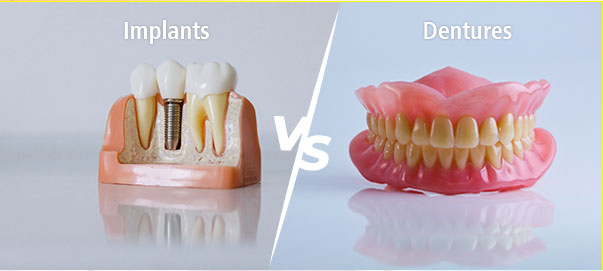
Compare dental implants and dentures, including cost, comfort, maintenance, implant-supported dentures and factors to consider before choosing tooth replacement.
Losing a tooth can affect much more than your smile. Missing teeth may make chewing uncomfortable, change the way you speak, or make you feel less confident about showing your teeth. Fortunately, there are several ways to replace missing teeth, and two of the most commonly discussed options are dental implants and dentures.
Table of Contents
But how do you know which one is right for you?
The answer depends on several factors, including the number of teeth missing, your oral and general health, the condition of your gums and jawbone, your budget, and what you expect from your tooth replacement.
When comparing Dental Implants vs Dentures, it is important to look beyond appearance and understand how each option works, what daily care involves, and what your dentist needs to consider before recommending treatment.
What Are Dental Implants?
Dental implants are designed to replace a missing tooth from the root upward. A small implant fixture is placed into the jawbone and, after the area has healed appropriately, it can support a dental crown or another restoration.
Unlike a traditional removable denture, an implant is fixed within the mouth.
For someone missing a single tooth, an implant-supported crown may provide an alternative to replacing the tooth with a removable appliance. For people missing several teeth, multiple implants can sometimes be used to support a bridge or denture.
However, dental implants are not automatically suitable for everyone. A dentist needs to evaluate factors such as bone volume, gum health, oral hygiene, medical history, and the condition of the surrounding teeth.
What Are Dentures?
Dentures are removable dental appliances designed to replace missing teeth and, depending on the type, some of the surrounding gum tissue.
There are different types of dentures:
- Complete dentures: Used when all teeth in an upper or lower arch are missing.
- Partial dentures: Used when some natural teeth remain.
- Implant-supported dentures: Connected to dental implants to provide additional support compared with conventional removable dentures.
Dentures can be an option for people who need to replace several or all missing teeth. They can also be removed for cleaning and maintenance.
A new denture may take some time to feel natural. Patients may need an adjustment period while they become comfortable speaking and eating with it.
Dental Implants vs Dentures: The Main Differences
Dental Implants vs DenturesThe biggest difference is how the replacement teeth are supported.
Dental implants are anchored into the jawbone, while conventional dentures generally rest on the gums and are removable.
Here is a simple comparison:
| Factor | Dental Implants | Conventional Dentures |
|---|---|---|
| Support | Anchored to the jawbone | Rest on gums |
| Removable | Usually fixed | Yes |
| Number of teeth | Can replace one or multiple teeth | Can replace several or all teeth |
| Treatment process | Usually involves surgical placement and healing | Usually does not require implant surgery |
| Cleaning | Requires normal oral hygiene plus implant care | Removed for cleaning |
| Bone considerations | Adequate bone may be required | Can generally be made without implant placement |
| Initial cost | Often higher | Often lower |
| Maintenance | Requires regular professional and home care | May require adjustments or replacement over time |
| Suitability | Depends on bone, gums and overall health | Depends on oral anatomy and individual needs |
This comparison is only a starting point. The right choice cannot be determined from cost or convenience alone.
Which Option Feels More Natural?
Many people considering tooth replacement want to know what their new teeth will feel like in everyday life.
Dental implants are fixed in place, which means they do not need to be removed before sleeping or eating. Once treatment and healing are complete, the restoration is designed to function as part of the mouth.
Traditional dentures are removable. They can restore chewing ability and appearance, but some people may notice movement or pressure while eating or speaking. Proper fitting and regular adjustments can make a significant difference.
For people who want removable teeth but need more stability, implant supported dentures may be another option to discuss with a dentist.
What About Implant-Supported Dentures?
Implant-supported dentures sit somewhere between traditional dentures and fully fixed implant restorations.
Instead of relying entirely on the gums for support, the denture is connected to dental implants. The implants help provide additional stability.
This can be considered when a patient has multiple missing teeth and wants more support than a conventional removable denture can provide.
However, implant-supported dentures still require careful assessment. The dentist needs to determine whether implants are suitable based on factors such as available bone, gum health, oral hygiene, and overall health.
They may also involve a higher treatment cost than conventional dentures because implant placement is part of the treatment.
When Might Dentures Be Considered?
Dentures may be considered when:
- Several teeth are missing.
- Most or all teeth in an arch need replacement.
- A removable tooth replacement is preferred.
- Implant treatment is not suitable or is not the preferred approach.
- A patient wants a tooth replacement option that does not require implant surgery.
Dentures are not simply a “backup” option. They remain an established form of tooth replacement and can be appropriate for many patients.
The important point is getting a properly designed and fitted denture rather than choosing an option based only on price.
When Might Dental Implants Be Considered?
Dental implants may be considered when:
- One or more teeth are missing.
- The patient wants a fixed tooth replacement.
- There is sufficient bone or a suitable plan to address bone deficiencies.
- The gums and surrounding tissues can support the treatment.
- The patient can maintain good oral hygiene.
- The patient’s overall health allows for the procedure.
Implants also require commitment after treatment. Good oral hygiene and regular dental visits remain important because the tissues around implants can develop problems if they are not properly maintained.
Cost: Should Price Decide Your Choice?
Cost is understandably an important part of any dental treatment decision.
Dentures generally have a lower initial cost than implant-based treatment. Dental implants can require several stages, including implant placement, healing, and restoration, which can make the overall treatment more involved.
But comparing only the initial price can be misleading.
You should also consider:
- How many teeth need replacement
- Whether treatment involves one tooth or an entire arch
- Future maintenance
- Possible adjustments or replacements
- The condition of your gums and jawbone
- Your preferred lifestyle and comfort level
Ask your dentist for a complete treatment plan and understand what is included before making a decision.
Your Jawbone and Gum Health Matter
One of the most important parts of planning tooth replacement is assessing the condition of your mouth.
When a tooth has been missing for some time, changes can occur in the surrounding bone. The amount and quality of available bone can influence whether implant treatment is possible and what additional procedures may be needed.
Gum health is also important.
Active gum disease should generally be addressed as part of a patient’s overall dental care. Your dentist may therefore recommend an examination, dental imaging, and other assessments before discussing the most appropriate missing teeth solutions.
What Should You Ask Your Dentist?
Before choosing between implants and dentures, consider asking:
- How many teeth need to be replaced?
- Is my gum health suitable for the proposed treatment?
- Do I have enough bone for implants?
- Would conventional or implant-supported dentures be appropriate?
- How long could the treatment take?
- What care will I need after treatment?
- What are the expected costs at each stage?
- What alternatives are available?
- How often will I need follow-up appointments?
- What happens if the restoration needs adjustment later?
A good consultation should give you enough information to understand your options rather than simply choosing the most expensive treatment.
Choosing a Tooth Replacement Option in Andheri
For patients looking for tooth replacement care in Andheri and nearby parts of Mumbai, accessibility can also be practical. Regular follow-ups may be required depending on the treatment, so choosing a clinic that is convenient to reach can make ongoing care easier.
At Dental Fit Clinic, dental implant and prosthodontic services are among the treatment areas offered, with the clinic located in Andheri, Marol. The clinic’s website also explains that treatment planning is based on discussing the patient’s dental condition, preferences, and expected outcomes.
If you want to learn more before scheduling a consultation, you can explore the clinic’s dental treatment services and use that information to prepare questions for your dentist.
Final Thought
Choosing between dental implants and dentures is not simply a decision between a fixed and removable smile. It involves your oral health, number of missing teeth, jawbone condition, gum health, budget, lifestyle, and long-term expectations.
For some patients, conventional dentures may provide an appropriate and practical solution. Others may benefit from dental implants or implant-supported dentures. In some situations, a bridge or another restorative option may also make sense.
The most useful next step is a proper dental assessment. Rather than choosing based on advertisements or someone else’s experience, discuss your specific situation with a qualified dentist and ask about the benefits, limitations, costs, maintenance, and alternatives for each option.
A well-planned tooth replacement should fit your dental needs as well as your everyday life.
FAQs
Are dental implants better than dentures?
There is no single option that is right for everyone. Implants and dentures have different benefits, limitations, treatment processes, and maintenance requirements. Your dentist can recommend an option based on your oral health and individual needs.
Can dentures replace all missing teeth?
Yes. Complete dentures can be designed to replace all teeth in an upper or lower arch. Partial dentures can replace multiple missing teeth when some natural teeth remain.
Are dental implants permanent?
Implants are intended as a long-term tooth replacement option, but they still require proper care and professional monitoring. The implant, crown, bridge, or denture supported by implants can have different maintenance and replacement considerations.
Are implant-supported dentures removable?
Depending on the specific design, implant-supported dentures may be removable by the patient or may be fixed. Your dentist can explain which type is appropriate for your situation.
Can I get implants if I have been missing teeth for years?
Possibly. The answer depends on the condition and amount of available bone, gum health, and other individual factors. A dental examination and appropriate imaging are usually needed before deciding.
How long does it take to get used to dentures?
It varies from person to person. Some people adjust relatively quickly, while others need more time and may require adjustments to improve fit and comfort.
What is the best tooth replacement option for one missing tooth?
For a single missing tooth, an implant-supported crown is one option that may be considered. A dental bridge or other treatment may also be appropriate depending on the surrounding teeth and overall oral health.