
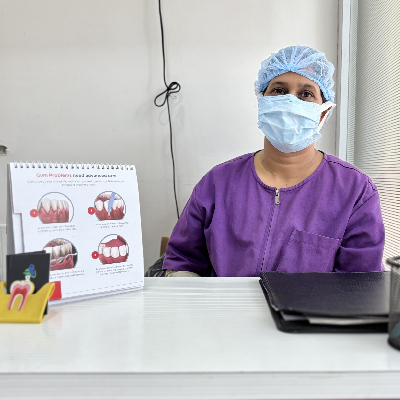
Learn how dental implant planning works, from implant assessment and imaging to treatment planning and placement. Consult Dr. Sumana Kar in Andheri, Mumbai.
Losing a tooth can affect more than your smile. It may make chewing uncomfortable, change how your other teeth meet, or simply make you hesitant to smile. Dental implants can be an option for replacing missing teeth, but successful treatment is not just about placing an implant.
Table of Contents
The planning stage matters just as much.
Before recommending an implant, an implantologist needs to understand your oral health, the condition of your jawbone and gums, your medical history, the position of the missing tooth and what you expect from treatment. This detailed evaluation helps create an individual dental implant treatment plan rather than following the same approach for every patient.
If you are considering dental implants in Mumbai, understanding what happens during implant planning can help you know what to expect during your consultation.
What Is Dental Implant Planning?
Dental implant planning is the process of assessing your mouth and creating a treatment approach that suits your specific dental condition.
A dental implant typically consists of an implant fixture placed in the jawbone, an abutment that connects the implant to the replacement tooth, and a crown or other restoration that becomes the visible part of the tooth.
However, the process is not simply about placing an implant where a tooth is missing.
Your implantologist may need to evaluate:
- The amount and quality of available jawbone
- Gum health and surrounding teeth
- The exact location of the missing tooth
- Bite and tooth alignment
- Nerve and sinus locations where relevant
- Existing dental restorations
- General medical and dental history
- Oral hygiene and ability to maintain the implant
- Your expectations regarding appearance and function
The findings from this assessment help determine whether an implant is appropriate and what preparation, if any, may be needed first.
What Happens During an Implant Consultation?
An implant consultation usually begins with a discussion about your dental concerns and treatment expectations.
You may be asked when the tooth was lost, whether you have experienced pain or infection, and whether you have previously had dental treatment in that area. Your dentist may also ask about your general health, medications and habits that could affect oral health or healing.
The examination is equally important.
The implantologist will examine the teeth, gums, bite and the area where the tooth is missing. Depending on your situation, dental imaging may also be recommended.
This first appointment is not simply about deciding whether you want an implant. It gives the dentist the information needed to determine what treatment approach is suitable for you.
Why Is an Implant Assessment Important?
Every patient’s mouth is different. Two people may both have a missing molar, but their implant requirements can be completely different.
One person may have sufficient bone and healthy gums, while another may have experienced bone loss after losing the tooth several years ago.
During an implant assessment, the dentist looks at these differences before treatment begins.
Bone Condition
Dental implants need adequate bone support. When a tooth has been missing for some time, the surrounding bone can gradually change.
If there is insufficient bone for the planned implant, additional treatment may sometimes be considered. Whether this is necessary depends on the individual’s examination and imaging.
Gum Health
Healthy gums are an important part of maintaining a stable oral environment around an implant.
If gum disease or another oral health problem is present, it may need to be addressed before implant treatment.
Position of Nearby Structures
The location of nerves, sinuses and neighbouring tooth roots can be important when planning implant placement, particularly in the back areas of the upper and lower jaws.
Appropriate imaging helps the implantologist understand the anatomy before deciding on implant positioning.
How Dental Imaging Helps With Implant Planning
A visual examination alone may not provide enough information for implant placement.
Depending on the case, the dentist may recommend dental X-rays or three-dimensional imaging such as CBCT. These images can provide information about the jawbone and anatomical structures that may not be visible during a routine examination.
Imaging can help the implantologist assess:
- Available bone dimensions
- Bone structure around the proposed implant site
- Position of important anatomical structures
- Relationship between the implant site and neighbouring teeth
- Possible infection or other concerns
- The most appropriate position and angulation for the implant
The type of imaging required depends on the individual case. Not every patient needs the same investigation.
Creating Your Dental Implant Treatment Plan
Once the examination and required investigations are complete, the implantologist can develop a treatment plan.
This may include several stages rather than a single appointment.
For example, a treatment plan may involve:
- Initial Assessment
Your oral health, missing tooth and treatment goals are reviewed. - Diagnostic Imaging
The dentist obtains the necessary information about your bone and surrounding structures. - Preparation, If Required
Existing dental problems may need to be treated before implant placement. In selected cases, procedures to improve the implant site may also be considered. - Implant Placement
The implant is placed in the planned position. - Healing Period
The implant needs time to integrate with the surrounding bone before the final restoration is fitted, depending on the treatment approach. - Final Restoration
A crown or other suitable restoration is attached to complete the tooth replacement.
The exact sequence and timing can vary significantly between patients.
What Can Affect the Treatment Plan?
Several factors can influence an implant treatment plan.
Number of Missing Teeth
Replacing one missing tooth is different from replacing several teeth. Multiple missing teeth may require a different restorative approach.
Bone Availability
Bone volume and quality can influence implant size, position and whether additional procedures are required.
Gum Condition
Active gum problems may need to be managed before implant treatment.
Existing Teeth and Restorations
The condition and position of neighbouring teeth can affect the final design and placement of an implant.
Bite and Tooth Position
Your bite needs to be considered because the implant restoration will eventually function alongside your natural teeth.
Overall Health
Certain medical conditions, medications and lifestyle factors may influence treatment planning and healing. This is why providing your dentist with accurate medical information is important.
Choosing an Implantologist in Andheri
When looking for an Implantologist in Andheri, it is worth looking beyond the procedure itself.
A good consultation should give you an opportunity to understand why a particular treatment has been recommended, what preparation may be required and what alternatives might exist.
Consider asking:
- What does my dental examination show?
- Do I need any additional imaging?
- Is there enough bone for the planned implant?
- Do I need treatment before implant placement?
- What type of restoration is being considered?
- How long could the overall process take?
- What care will be required after treatment?
- What are the alternatives to an implant in my situation?
A clear discussion can help you make a more informed decision rather than choosing treatment based only on price or a procedure name.
Finding a Dental Implant Clinic in Andheri
If you are comparing a Dental Implant Clinic in Andheri, look for a practice where diagnosis and treatment planning are given appropriate attention.
The right treatment may not always be the fastest treatment. A careful assessment can identify problems that should be addressed before implant placement and can help the dentist plan the position and restoration more appropriately.
For patients consulting Dr. Sumana Kar, the treatment discussion can be based on the individual’s dental condition, examination findings and treatment requirements rather than assuming that every missing tooth needs the same approach.
You can also learn more about the clinic and its dental services through Dental Fit Clinic
Questions to Ask Before Starting Implant Treatment
Before agreeing to treatment, it is reasonable to ask for a clear explanation of your options.
You should understand:
- Why an implant has been recommended
- What the planned treatment involves
- Whether additional procedures may be required
- How long different stages may take
- What type of final tooth replacement is planned
- What aftercare will involve
- What alternatives are available
A well-explained treatment plan should help you understand both the benefits and limitations of the proposed procedure.
A Careful Plan Comes Before the Implant
A dental implant is a long-term tooth replacement, so planning should not be treated as a quick formality. The condition of your gums, jawbone, bite and surrounding teeth all contribute to deciding how treatment should be approached.
Whether you are missing one tooth or several, a proper dental implant planning process gives your dentist the information needed to create a treatment plan based on your individual needs.
If you are considering treatment with an Implant Specialist in Mumbai, start with a detailed consultation and ask questions about every stage. Understanding the plan before treatment begins can make the process clearer and help you make a decision that is right for your oral health.
FAQs
Is dental implant planning necessary for every patient?
Yes, an assessment is important before implant placement. The dentist needs to evaluate your gums, bone, bite, surrounding teeth and other relevant factors before deciding how treatment should proceed.
How long does an implant consultation take?
The duration varies depending on your dental condition and whether imaging or additional examination is required. Your dentist can explain what will be covered during your appointment.
Do I always need a CBCT scan before getting an implant?
Not necessarily. The imaging required depends on the individual case. Your dentist will recommend appropriate imaging based on the clinical examination and treatment requirements.
Can an implant be placed immediately after tooth removal?
In selected cases, immediate implant placement may be possible. However, it is not suitable for everyone. Bone condition, infection, gum health and other clinical factors need to be assessed first.
How long does the complete dental implant procedure take?
There is no single timeline for every patient. The overall treatment may depend on healing, bone condition, whether additional procedures are required and the type of restoration planned.
How do I find an Implant Specialist in Mumbai?
Start by looking for a qualified dental professional who provides a detailed assessment and explains your treatment options clearly. During the consultation, ask about the proposed procedure, imaging, expected stages and alternatives.